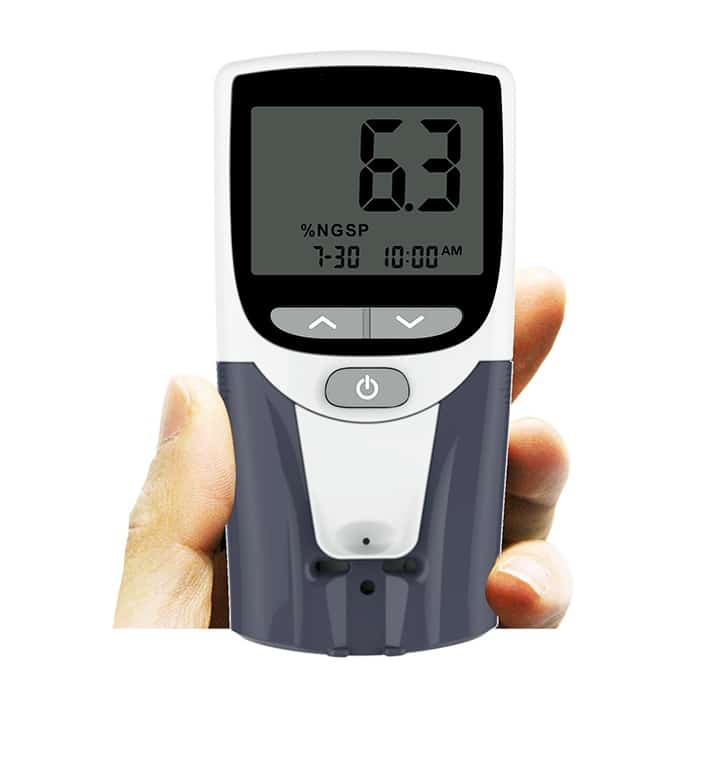


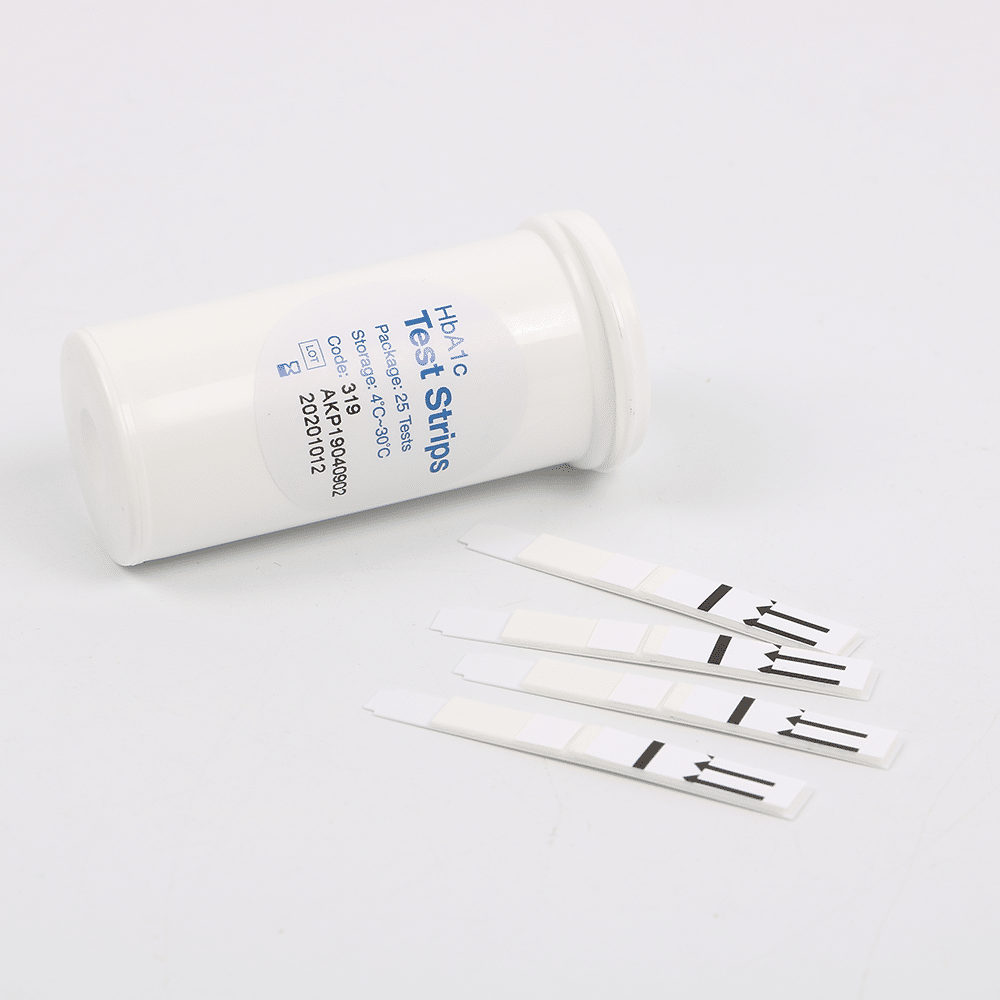
The Glycohemoglobin Analyzer
- HbA1c, formed in a non-enzymatic glycation pathway by hemoglobin’s exposure to plasma glucose, reflects average glycemia over several months.
- As a primary technique to assess the effectiveness of diabetes management, HbA1c has a strong predictive value for diabetes complications. Lowering HbA1c has been shown to reduce complications.
- HbA1c≥6.5% (48 mmol/mol) is one of the criteria for diabetes diagnosis. The normal HbA1c range is 4.0-5.7% (20-39 mmol/mol), while 5.7-6.4% (39-46 mmol/mol) is considered prediabetes.
- Point-of-care testing with the HbA1c analyzer provides the opportunity for more timely treatment changes.
| Specifications | Technical Parameters |
| Testing Principle | Boronate Affinity Chromatography |
| Testing Item | Glycohemoglobin (HbA1c) |
| Testing Range | 4% -14% |
| Precision | CV<3% (HbA1 c: 4.0%-6.5%) |
| Blood Sample | Fingertip blood or venous blood (EDTA Anticoagulation) |
| Blood Volume | About 3µL |
| Testing Time | About 5 minutes |
| Data Unit | Set in advance the data unit:
NGSP%; IFCC mmol/mol |
| Voice Prompt | Voice prompt in the whole process |
| Data Storage | 1000 test results |
| Data Port | Mini USB data interface, can be connected with HIS/LIS system/thermal printer |
| Bluetooth Function | Optional |
| Power Required | AAA battery x4 |
| Analyzer Dimension | 61.5mm x 122.9mm x 24.5mm |
| Screen Size | 47mm x32mm |
| Weight | 112g (Does not include battery) |
| Operating Condition | Temperature: 10°C-40°C; Humidity: 30%-70% |
| Storage Condition | Temperature: -10°C-S0°C; Humidity: <80% |
The A1C test
is a common blood test used to diagnose type 1 and type 2 diabetes. If you’re living with diabetes, the test is also used to monitor how well you’re managing blood sugar levels. The A1C test is also called the glycated hemoglobin, glycosylated hemoglobin, hemoglobin A1C or HbA1c test.
An A1C test result reflects your average blood sugar level for the past two to three months. Specifically, the A1C test measures what percentage of hemoglobin proteins in your blood are coated with sugar (glycated). Hemoglobin proteins in red blood cells transport oxygen.
The higher your A1C level is, the poorer your blood sugar control and the higher your risk of diabetes complications.