
Why is HbA1c test so important?
The UK Prospective Diabetes Study (UKPDS) demonstrated that the higher the HbA1c, the greater the risk of various diabetic complications. A 1 % decrease in HbA1c can reduce the risk of microvascular complications by 37%, peripheral vascular disease by 43%, myocardial infarction by 16%, stroke by 12%, and diabetes-related mortality by 21%. In 2010, the American Diabetes Association (ADA) included HbA1c ≥ 6.5% as one of the diagnostic criteria for diabetes in its diabetes management guidelines. In 2011, the World Health Organization (WHO) also recommended using this cutoff point for diagnosing diabetes in countries and regions where conditions permit.

Glycated hemoglobin (HbA1c) is a product of the slow, continuous, and non-enzymatic binding of hemoglobin in red blood cells with glucose, which is irreversible. HbA1c level represents the percentage of hemoglobin that is bound to glucose. It is an indicator for evaluating long-term blood glucose monitoring, indirectly reflecting the average blood glucose level of the patient over the past three months.
HbA1c has good stability and is not affected by occasional fluctuations in blood glucose levels. It is closely related to diabetic complications, especially microvascular complications, and holds significant clinical value in the diagnosis and monitoring of diabetes. HbA1c levels are closely related to the occurrence of chronic complications of diabetes, especially microvascular complications, and can be an important indicator for predicting chronic complications.
Studies have found that when HbA1c is less than 7%, the risk of chronic complications in diabetes is low, but when HbA1c exceeds 7%, the risk of chronic complications increases significantly.
What is the appropriate range for HbA1c Levels?
Generally, A1C test results are reported as a percentage. A higher A1C percentage corresponds to higher average blood sugar levels. Results for a diagnosis are interpreted as follows:
- Below 5.7% is normal.
- 5.7% to 6.4% is diagnosed as prediabetes.
- 6.5% or higher on two separate tests indicates diabetes.
The goal for most diabetic patients is to maintain an HbA1c level of less than 7%. However, the specific target can vary based on individual circumstances:
- HbA1c < 7%: Suitable for most adult type 2 diabetes patients (excluding pregnant women).
- HbA1c < 6.5%: Suitable for younger type 2 diabetes patients without complications and with a longer expected lifespan.
- HbA1c < 8.0%: Suitable for patients with a history of severe hypoglycemia, shorter expected lifespan, significant microvascular or macrovascular complications, severe comorbidities, or those with a long duration of diabetes.

Limitations of the HbA1C test
Some factors may interfere with the accuracy of A1C test results. These include:
- Pregnancy
- Recent or heavy blood loss
- Recent blood transfusion
- Conditions that result in insufficient red blood cells (anemias)
- Hemoglobin variants
The most common form of the oxygen-transporting hemoglobin protein is called hemoglobin A. The presence of other variants of the protein may result in inaccurate A1C test results. Hemoglobin variants are more common among people of African, Mediterranean, or Southeast Asian descent. If you have a hemoglobin variant, your test may need to be sent to a specialized lab or you may need a different test for diagnosis and monitoring of diabetes.
How to perform the HbA1C test
- Preparation:
– No special preparation is needed; fasting is not required.
– Inform your healthcare provider about any medications or supplements you are taking, as some may affect the test results.
- Blood Sample Collection: important for collecting blood sample
- Do not use the lancet if the safety cap is lost or detached.
- Test the blood sample as soon as possible after the sample is collected.
- While testing venous blood which is stored in an anti-coagulant tube, gently shake the anticoagulant tube upside down 5~6 times to mix the blood.
- Interpreting Results:
– Results are usually reported as a percentage, indicating the amount of glycated hemoglobin in the blood.
– The target HbA1c level can vary based on individual health conditions and treatment goals. Generally, an HbA1c level below 7% is recommended for most diabetic patients, but this may differ based on specific circumstances.
4. Follow-Up:
Discuss the results with your healthcare provider to understand what they mean for your diabetes management. Based on the results, your provider may adjust your treatment plan, including medications, diet, and exercise.
5. Frequency of Testing:
For most diabetic patients, it is recommended to test HbA1c levels every three months to monitor and adjust treatment as needed. Some patients with stable blood glucose levels may be tested every six months.
Regular HbA1c testing is crucial for effective diabetes management, helping to prevent complications and maintain overall health.
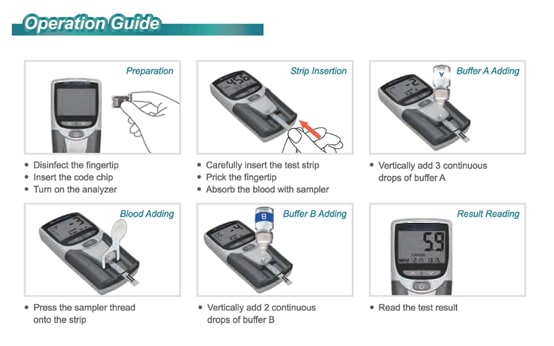
SOYMED HbA1c testing solutions

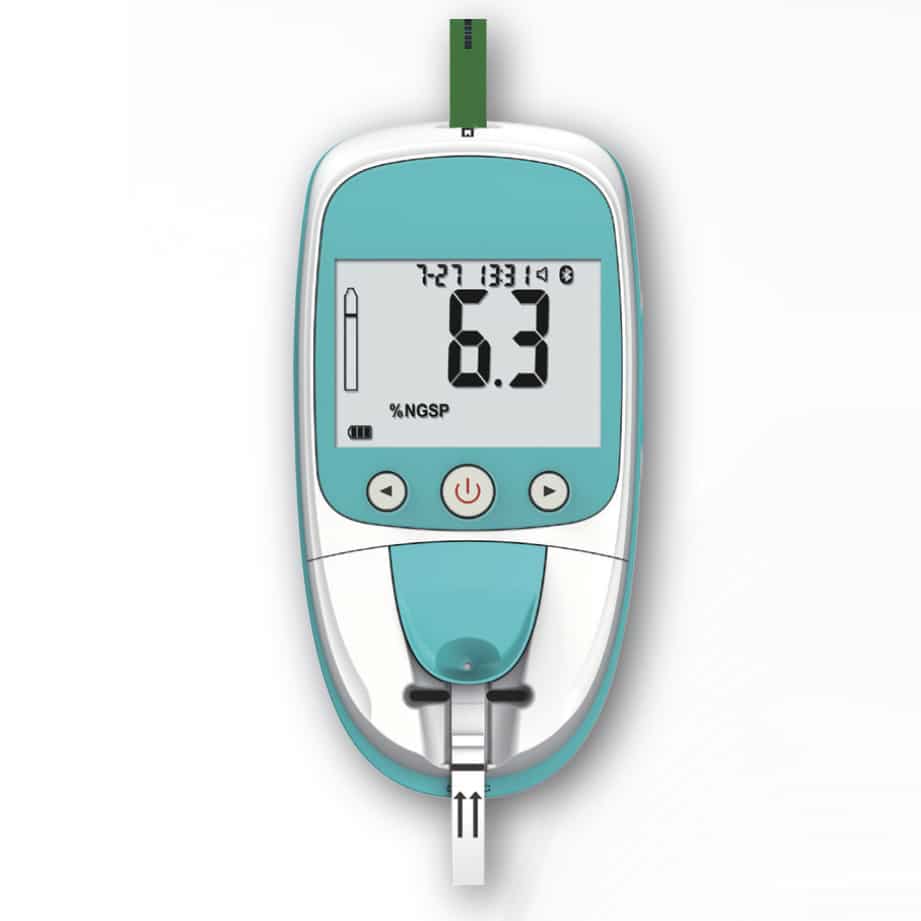

We have a variety of point-of-care HbA1c testing devices, HbA1c meter, Blood Glucose &Glycated hemoglobin 2-in-1 device, and four-channel HbA1C Chek Pro. Welcome to consult us for more details!