
This article will provide an overview of how Dry Biochemistry Analyzers, also known as Dry Chemistry Analyzers, work, as well as their principle, application scenarios, types, advantages, and limitations.
1. What is a Dry Chemistry Analyzer
A dry chemistry analyzer is a medical diagnostic device that is used to analyze various substances in samples such as blood, serum, or urine.
The term “dry” refers to the fact that the reagents are stored in a stable, dry form, typically on a test strip or within a reagent cartridge. These devices are commonplace in clinical laboratories, and used for biochemical tests, just like large-scale, fully automated chemistry analyzers. Kidney function, liver function, glucose, cholesterol, renal function, and for some machines even electrolytes, including sodium, potassium, and chloride, can be checked.

2. Operating principle
Dry chemistry employs multilayered films and solid-state reagent technology, also known as solid-state chemistry. Various techniques, such as spectroscopy, mass spectrometry, and nucleic acid hybridization, are employed to measure chemical concentrations accurately.
3. Who usually uses dry chemistry analyzers?
Various healthcare professionals and institutions utilize dry chemistry analyzers for diagnostic testing, users of dry chemistry analyzers may vary based on device type and model, Typical users include:
- Clinical Laboratories:
Hospitals and independent clinical laboratories often use dry chemistry analyzers for routine diagnostic testing. These analyzers enable efficient and rapid processing of a large number of samples.
- Point-of-Care Settings:
Physicians, nurses, and other healthcare providers in point-of-care settings may use compact and portable dry chemistry analyzers. These devices allow for on-the-spot testing, providing quick results for immediate decision-making.
- Primary Care Clinics:
Primary care clinics and healthcare facilities offering various diagnostic services may use dry chemistry analyzers to perform various tests, including blood chemistry and lipid panels.
- Emergency Departments:
Emergency departments can benefit from the rapid turnaround time of dry chemistry analyzers for critical tests, helping healthcare professionals make timely decisions in emergencies.
- Research Laboratories:
Research laboratories involved in clinical studies or medical research may use dry chemistry analyzers to analyze biological samples and gather data for their studies.
- Pharmacies:
Some pharmacies, especially those with additional healthcare services, may use dry chemistry analyzers to provide on-site testing for customers.
4. Types of dry chemistry analyzers
Dry chemistry analyzers include desktop type, laptop type, and handheld type, depending on their applications or testing scenarios. Each type of analyzer has its benefits and applications:
5. Advantages and limitations of different types
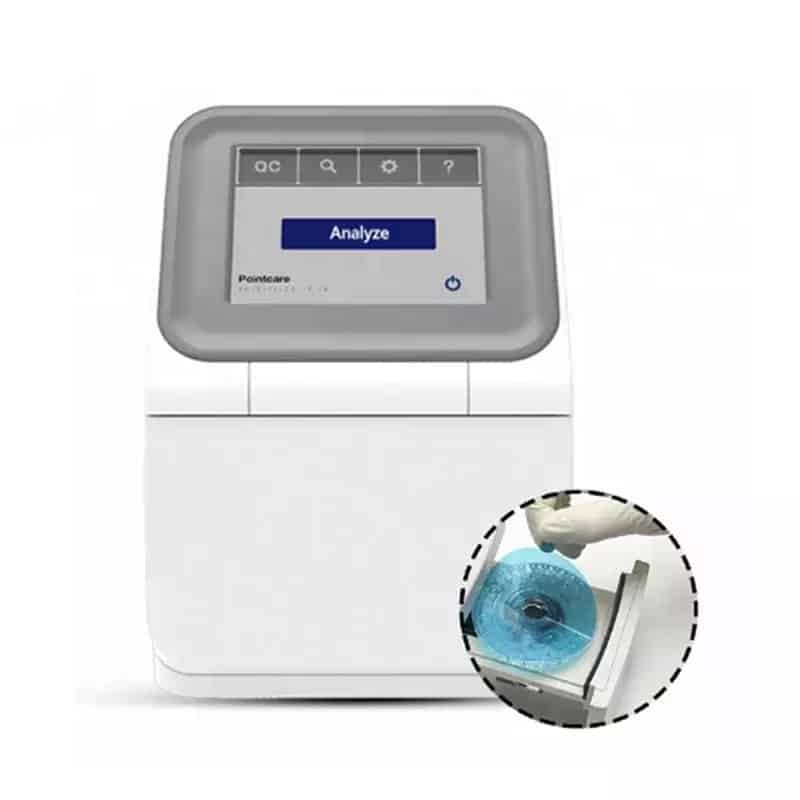
Desktop-type is typically designed for high-throughput testing in larger laboratories. They can offer a wider range of testing capabilities and process a large number of samples efficiently. Most desktop analyzers can also be integrated into laboratory information systems (LIS) for powerful data management.
Desktop analyzers are well-suited for routine testing in clinical laboratories where a high volume of samples needs to be processed.
Desktop dry chemistry analyzers usually have higher analytical performance due to their larger size which allows for more sophisticated optics and detection systems. They are typically well-calibrated and maintained, ensuring reliable and accurate results for a wide range of tests.
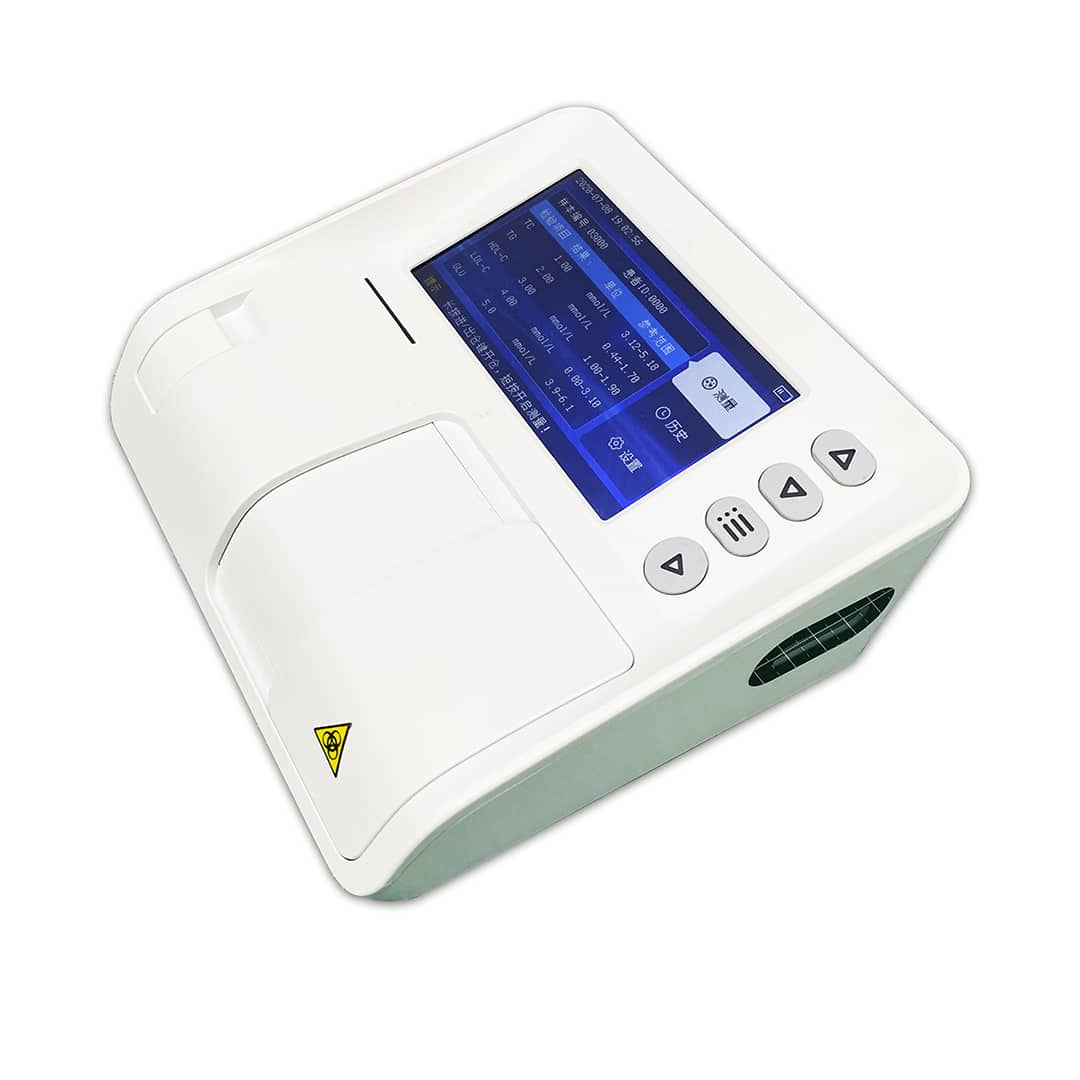
The laptop type gets a balance between performance and portability, offers greater mobility compared to desktop models, more suitable for on-site testing or settings with limited space. Laptop analyzers can be used in Point-of-Care Testing (POCT) settings for immediate test results.
They are suitable for healthcare professionals conducting tests at the bedside or in clinics, for fieldwork, or locations where access to a traditional laboratory is limited.
Laptop analyzers can offer high accuracy, but their performance depends on the specific model, calibration procedures, and the quality of the reagents.
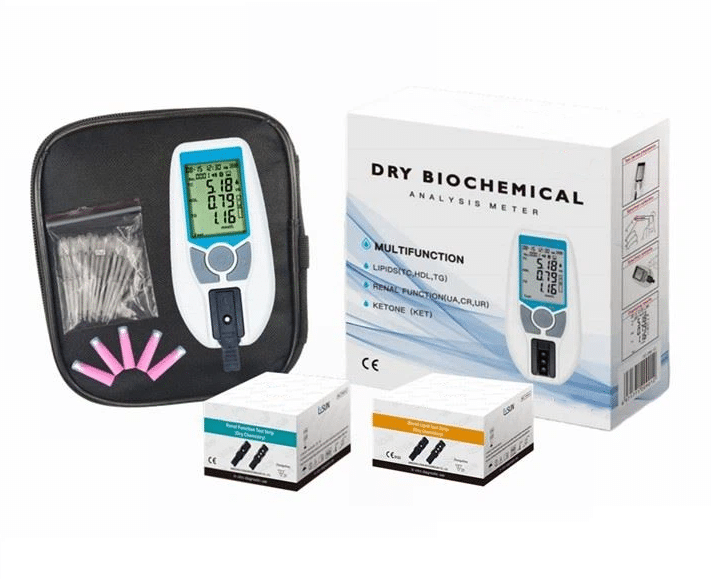
Handheld type is compact and lightweight, easy to use, offering the ultimate portability among the three types. they are designed for quick on-site testing with minimum blood specimen and get fast results within minutes. They are ideal for immediate testing in emergencies or at the patient’s bedside, home healthcare and fieldwork, and remote locations:
Handheld analyzers have ultimate portability, enabling rapid testing at the point of care. While they are accurate for some specific tests, they may have limitations on the test range it can perform. The smaller size and simplified design may lead to trade-offs in terms of analytical performance compared to larger, more sophisticated systems.
6. Notice
It’s important to recognize that accuracy is not solely determined by the type of analyzer but also by factors such as proper operation, calibration, quality of reagents, and proper maintenance. Proper training of laboratory personnel and regular calibration are essential to ensure accuracy.